According to the latest data from Immigration, Refugees and Citizenship Canada (IRCC), the government approved only 75,372 new study permits in 2025. This figure represents a mere 36% of the previous year’s total and meets only 25% of the government’s established target.
The shift has hit specific markets harder than others. Approval rates for Indian students, Canada’s largest source market, plunged from 69% in 2024 to between 25% and 27%.
Conversely, applicants from France, the United States, and South Korea maintained high approval rates of 94% to 96%, according to figures obtained by ApplyBoard, an education technology company connecting international students with institutions across North America, the U.K., and Australia.
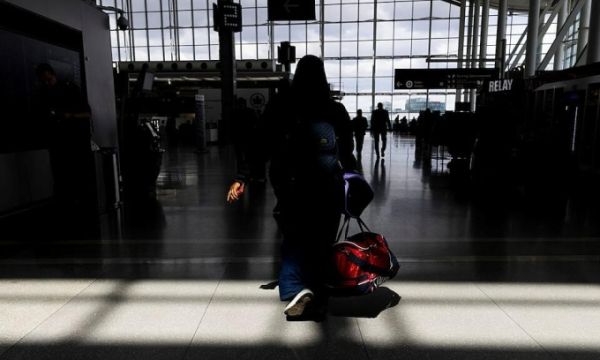
People take a break from playing sports on the grounds of the University of Toronto in Toronto, Ontario, Canada, Sept. 9, 2020. Photo by Reuters |
A primary driver of this decline is the surge in visa extensions among students already residing in the country. ApplyBoard reports that this group accounted for 73% of all approved post-secondary study permits last year. As these renewals rise, the remaining quota available for brand-new international applicants has tightened significantly.
Visa refusals have also intensified the downward trend. In 2024, over 75% of rejected applications were denied because officials were concerned students would not leave Canada after their studies. Other applicants were turned away for failing to demonstrate sufficient financial capacity.
The contraction is a direct result of Canada’s recent policy shifts, including a cap on international enrollments. While these reforms were intended to improve program integrity and manage student volumes, industry monitors suggest the measures have overshot their intended goals.
A report from The Office of the Auditor General of Canada found that the federal government significantly underestimated the impact of the enrollment cap. The Auditor General also observed: “The department did not know why [study permit] approval rates were lower than projected,” according to ICEF Monitor.
Experts now warn that these shifting policies are placing immense pressure on university finances and damaging Canada’s reputation as a top-tier study destination.
“As the number of extensions grows, the proportion of the cap left for new applicants shrinks,” ApplyBoard CEO Meti Basiri told The PIE News. Basiri noted that the number of onshore students extending their stay has grown significantly in recent years.
Basiri further explained that refusal trends from the previous year likely continued to influence current decision-making. He noted that over three-quarters of 2024 refusals were due to officers not being convinced applicants would leave after their studies, while over half cited a lack of financial assets.
The scale of the decline is further illustrated by the drop in interest.
Last year, IRCC processed 211,000 new post-secondary applications from prospective international students, which was 55% lower year-over-year, according to ApplyBoard.
This indicates that far fewer students even attempted to apply for permits last year, continuing a downward trend that began in 2023.
By the end of 2025, the total number of international students holding valid study permits in Canada stood at approximately 690,000. This is a substantial decrease from the peak of over one million reported in previous years.
Contact to : xlf550402@gmail.com
Copyright © boyuanhulian 2020 - 2023. All Right Reserved.