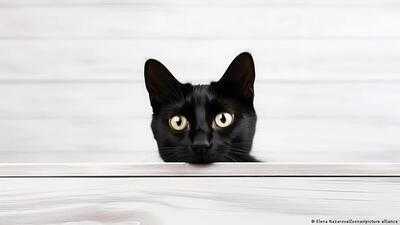
International team uncovers gene mutations that cause rare and aggressive cancer in both cats and humans. Their findings could provide a path to treatments for both species.Cat lovers have more in common with the family feline than they may realize. New research published in the journal Science suggests cats and humans develop similar cancers due to similar tumor-causing genetic mutations. This finding could lead to new cancer treatments for both pets and people. The researchers created a cat "oncogenome" — a profile of gene mutations in cats that can cause cancer — using samples from nearly 500 cats in Canada, the UK, Germany, Austria and New Zealand. Thirteen different types of cancer found in cats were analyzed for 1,000 genes known to cause cancer in humans. The oncogenome showed: Half of cancer samples in cats had a mutation to the FBXW7 gene, which is associated with aggressive forms of breast cancer in humans. Just under half of the samples had PIK3CA mutations, which is also associated with human breast cancer. Tumor-protein 53 — also known as TP53 or p53 — was the most common mutation in cats, and is often implicated as a driver of many human cancers. A better model for cancer treatment? While lab rodents have long been used to study cancers and potential drugs, cats could provide a more suitable model for scientific research. "Here, you've got a model of spontaneously developing tumors, just as spontaneously as occurs in a human," said Louise van der Weyden, the study's senior researcher, based at the Wellcome Sanger Institute in the UK. "These pets — cats and dogs — are in the same environment that we're in, so they've got the same pollution […] something that you’re not going to get in the laboratory." By using a large number of non-pedigree housecats, the researchers had a genetically diverse pool in which to search for gene mutations common in cats and humans. Van der Weyden said the pool could be expanded to include cats from other countries to offer an even broader understanding of cancer causes shared by felines and humans. Of greatest interest is the potential for this cat oncogenome project to help identify environmental risks within the home. If, for instance, a certain genetic change triggers mammary cancer in the family cat, it could indicate similar risks for humans in the same house. "There's a lot of studies now that are starting to think of cats and dogs as sentinels for the environment — the canary in the coal mine — because they are in the exact same environment that we are in," said van der Weyden. "We saw UV mutations [in cats] that were exactly the same as in humans, for example." What is next for the oncogenome? Trialing potential cancer therapies on cats with potential benefits for humans was shown in 2025 in the US by a group at the University of California. The team led by Daniel Johnson and Jennifer Grandis tested a drug used to treat squamous cell carcinomas in humans on a group of cats with an oral form of the disease. Around a third of the treated cats lived an extra half year on average. Though they weren't involved in the new oncogenome research, the UC team welcomed its findings. "This is truly an exciting paper that further supports the relevance to humans, as well as pets, of studies like ours," Johnson and Grandis wrote in an email to DW. "It is remarkable that alterations in genes such as p53 are found in high prevalence in both humans and cats. We can now begin to use studies like this to develop personalized cancer therapies for both cats and humans." Van der Weyden hopes that her group can continue exploring cancers in pets to benefit both animals and humans. Because animal harm is minimized by using "real world" rather than lab animals, with support of animal owners, unnecessary animal harm could also be avoided, she said. "Most [pet owners] will sign a form to say they're happy for [biopsy samples] to be used for research purposes, which I think is really open-minded and really wonderful," van der Weyden said. "It would be wonderful if something could come out of it. I think it’s wonderful to acknowledge all the owners that do that because without it, we couldn’t do this kind of study." Edited by Zulfikar Abbany
Contact to : xlf550402@gmail.com
Copyright © boyuanhulian 2020 - 2023. All Right Reserved.