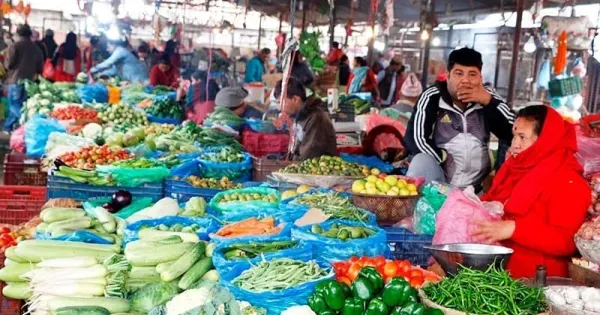
Kathmandu. Due to the huge increase in the prices of petroleum products, volatile fluctuations in the US dollar and geopolitical tensions, there has been a significant increase in the prices of consumer goods in the Nepalese market.
According to the ‘Price Analysis Report’ released by Nepal’s Commerce, Supply and Consumer Protection Department, the prices of rice, pulses, eggs, banana and sugar have increased in April as compared to the month of March, while sharp fluctuations were seen in the prices of green vegetables and fruits.
According to the report of the department, unusual fluctuations were seen in the prices of seasonal vegetables in the months of March and April. In the month of March, the maximum price of the vegetable which was Rs 23, increased to a maximum of Rs 100, i.e. it increased by 334.79 percent. Some vegetables fluctuated as much as 250 percent.
A fluctuation of 165 percent was recorded in bottle gourd, 138.89 percent in pumpkin and 125 percent in cucumber. Additionally, commodities like small local tomatoes, local cauliflower, broccoli and jiri saag also witnessed price changes of more than 100 per cent, indicating high price volatility in the market.
From March to the third week of May, Nepal Oil Corporation revised the prices of petroleum products six times. On March 15, the price of petrol was Rs 172 per liter and diesel/kerosene was Rs 152 per liter, which increased to Rs 219 for petrol and Rs 237 per liter for diesel/kerosene by April 15.
However, on April 30, the price of petrol dropped to Rs 217 and diesel/kerosene to Rs 225, but the price of cooking gas reached Rs 2,160 per cylinder.
According to the department’s analysis, due to this unusual increase in the price of fuel, transport fares, air freight and transportation of goods became expensive, due to which the prices of consumer goods increased in the overall market. Another major factor affecting the price index was fluctuations in the exchange rate of the US dollar.
In the month of March, the minimum buying rate of US dollar reached Rs 148.39 and maximum Rs 151.56, due to which a fluctuation of 2.13 percent was seen. Due to the strengthening of the dollar, the cost of raw materials and food grains imported by Nepal also increased.
The report also mentions that the ongoing tensions in the Middle East, especially the Iran-Israel conflict, rise in crude oil and gold prices in the international market and disruptions in the global supply chain have also had a direct and indirect impact on Nepal’s market.
Contact to : xlf550402@gmail.com
Copyright © boyuanhulian 2020 - 2023. All Right Reserved.