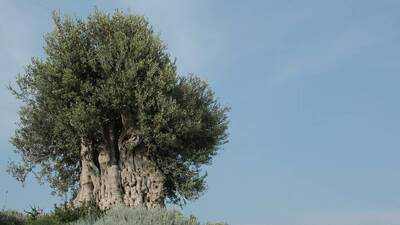
For centuries, the olive tree endured changing kingdoms, harsh droughts, and the shifting landscape of eastern Spain. Its latest journey, however, did not come from nature or conflict; instead, a powerful crane carefully lifted the tree from the ground and relocated it to a new spot within the same private estate. In its new location, the 500-year-old Spanish olive tree serves as the focal point of a mountain chalet garden. The relocation, carried out by Spain’s Valencian Community , highlights the recent growing trend of preserving historic trees while redesigning private landscapes rather than completely getting rid of them or replacing them.
A carefully planned relocation for the living monument
The centuries-old tree, estimated to weigh over 6,000 kilograms, was moved after the property owner decided to redesign the garden following the loss of an old pine tree during a storm. However, rather than planting a new ornamental tree, the owner decided to relocate an ancient olive tree because of its historical presence and symbolic value. The relocation operation was handled by Jardines con Vida, a Spanish landscaping company that specialises in transplanting mature trees. Workers used a heavy-duty crane together with a low-loader transport vehicle to move the giant tree a few dozen metres within the property. As per , the root ball was carefully protected throughout the process to maximise the survival chances of the ancient tree. Notably, every stage was planned carefully to minimise stress on the 500-year-old tree.
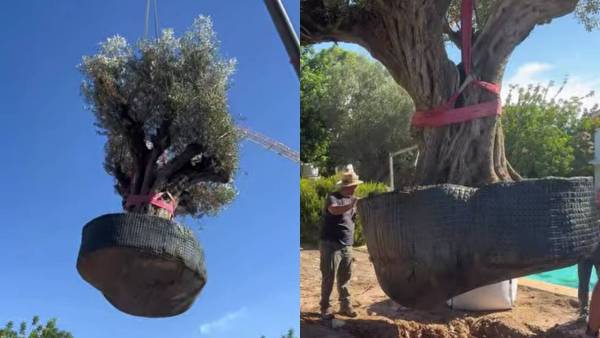
For those who are wondering why the owner chose to move a tree instead of just planting a new one, olive trees have long been culturally symbolic across the Mediterranean. The trees represent resilience, longevity, and continuity, with mature specimens likely to survive several centuries under favourable conditions, making them a more valuable landscape feature than ordinary garden plants. In this case, the homeowner reportedly wanted a ‘star tree’ capable of giving the redesigned garden both visual and historical impact. Interestingly, many experts note that transplanting a large tree is more complex than planting young ones, as preserving an adequate root system is essential for the specimen’s long-term survival after the relocation.
Historic trees are gradually becoming part of modern landscape design
Landscape architects increasingly view mature trees as long-term ecological assets rather than just decorative features, as these specimens provide extensive shade, reduce urban heat, improve air quality, and support biodiversity. Diario Uno also noted that designers are incorporating vertical gardens and other green infrastructure into residential projects to improve sound insulation and reduce temperatures in summer. It is worth noting that although relocating a tree of that size needs specialised machinery and significant planning, preserving an established specimen can deliver major environmental benefits that newly planted trees might take decades to match.
Interestingly, the relocation of the 500-year-old tree also required compliance with regional conservation rules. In the Valencian Community, olive trees older than 350 years receive legal protection under a law designed to safeguard historic trees and preserve the region’s natural heritage. Therefore, because of these protections, moving the massive trees demands careful handling to ensure that they remain healthy even after relocation. While reports do not disclose the cost of the relocation, mature olive trees are highly valued in the ornamental market and depending on age, size, and rarity, prices can be expected to range from several thousand euros.
Contact to : xlf550402@gmail.com
Copyright © boyuanhulian 2020 - 2023. All Right Reserved.