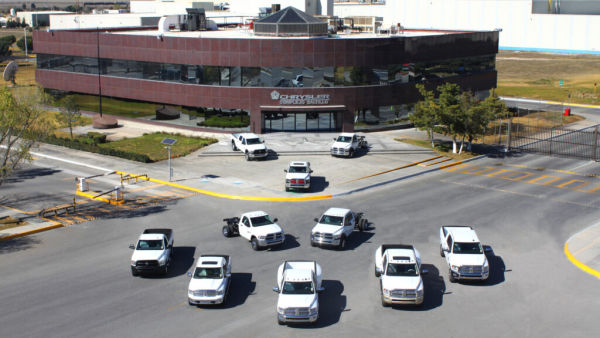
Ram’s parent Stellantis is involved in discussions with its suppliers about whether there’s a strong economic case to be made for moving Ram heavy-duty pickup truck production from its Saltillo, Mexico plant to its plant in Warren, Michigan. And if you are thinking that this potential move is all about the tariffs that have been placed on Mexican-made vehicles by President Trump, you are right — we have already explained how much tariffs have cost North American automakers so far.
Stellantis’ Saltillo plant covers 212,850 square feet of floor space. Production there began in 1995, with the switch to heavy-duty pickup production taking place in 2009. It currently produces the Ram 2500, 3500, 4500 and 5500 heavy-duty trucks for the U.S. market, including two new Ram sport trucks. The corporation’s Warren, Michigan truck plant covers 3.31 million square feet, much larger than Saltillo, and it has been making trucks since 1938. The Warren plant currently produces only the Jeep Grand Wagoneer, leaving Warren with plenty of excess capacity for production of the Ram heavy-duty truck. Of course, it all depends on whether Stellantis decides that the move makes business sense.
This initial process likely involves Stellantis consulting its suppliers about the cost of Mexican-made parts with tariffs added, compared to the cost of those parts if they were made in the U.S. and not subject to tariffs. The considerable cost of moving the production lines from Mexico to Michigan would also have to be factored into the equation. But there’s more to it than that.
What other considerations do Ram and Stellantis have to consider in making such a move?
There are numerous factors that could impact this decision on moving Ram heavy-duty truck production from Saltillo to Warren. One is the big-picture economics involved, in which the lower cost of building these trucks in Mexico, but with tariffs of up to 25% added, is compared with much higher parts costs from U.S. suppliers plus the cost of assembling them with UAW workers who’ve achieved very high wages in their recent contract negotiations. This contract, which expires on April 30, 2028, was a reason for moving production of these very profitable products to Mexico. In fact, in 2024, the U.S. brought in over $86 billion in motor vehicles and over $63 billion worth of auto parts from Mexico. But Ford and General Motors currently build their heavy-duty pickups in the U.S., presumably profitably, so that’s something for Stellantis, with its upcoming 2027 Ram Power Wagon, to consider.
Then there are political considerations. They revolve around how long these tariffs will be imposed, how popular the President’s party is as we approach the 2028 Presidential election, how the various supply chains change as a result of tariffs, and whether these changes in the supply chains are going to be permanent or temporary.
And let’s not forget the matter of pricing power. GM and Ford are unlikely to raise prices, forcing Stellantis to hold theirs. The tariffs reduce Stellantis’ presumed higher profitability from Mexican manufacture either way, whether they continue to be made in Mexico with tariffs applied, or are made in the U.S. with higher-cost parts and more expensive labor.