
CMF India is expected to spin out as its own company based in India. The plan includes Indian majority ownership, a local team, and research and development work in India. On September 21, co-founder and CEO Carl Pei said this is a step toward building a global consumer tech business with roots in India.
One key point matters here. “Majority Indian-owned” is not the same as “fully Indian-owned.” Nothing is not expected to take a full exit. Instead, Nothing is set to retain a stake in CMF and keep a role as a shareholder and partner after the restructuring. So this is more about ownership and corporate setup than a full break between CMF and Nothing.
Pei also framed the move as more than a production change. He wants more engineering and R&D work done in India. At the same time, CMF is still expected to use strengths that Nothing has already built.
What Shifts For CMF India?
CMF started as Nothing’s budget-friendly consumer tech line. Under the updated plan, CMF would become a separate firm. It would be formed as a new entity in India and run from India. It would be run with Indian control, backed by Indian shareholders, and it would have its own staff and R&D group in the country.
Nothing will not fully step away. The company is expected to stay in the new structure as a shareholder and partner. Also, current reports say that Nothing’s engineering work, software know-how, supplier ties, and broader global support can continue to support CMF.
Why Is CMF Spinning Off Into Its Own Company?
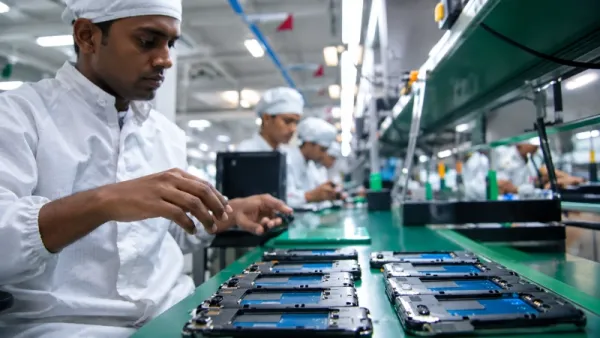
Pei’s view links to how India’s role in electronics is shifting. India already has a big phone-making scene. Pei’s point is that the next move is not only to assemble phones. He wants more hands-on engineering and more R&D work to happen in India.
Bussiness says Pei thinks the CMF shift is meant to grow the skills built by Nothing and CMF. Those skills can then be used in India, at a larger scale. That is a key difference. Making goods in India is not the same as doing the engineering work in India. A phone can be made in India. Yet the hard parts might still be designed or managed elsewhere.
That can include product engineering, software work, picking components, and holding intellectual property. Pei’s goal for CMF is higher. He wants CMF to build products using engineering and R&D done inside India.
His plan could cover many areas. For example, product structure and materials. Camera hardware and software. Work on the operating system, plus updates. Antenna tuning and required testing. He also talks about working with suppliers on display parts, chipsets, and camera modules. So the announcement is not just about the plant location for CMF phones. It is also about where the work is done that leads to the technology in the final product.
Splitting CMF Into Its Own Company Does Not Force It To Start Over From Zero
CMF can use what already exists. Pei has noted that Nothing’s software work, engineering track record, product design ability, supplier contacts, and experience in building a worldwide brand can back the new effort. How those capabilities will be shared or structured after the restructuring has not been fully disclosed.
One area may matter more than the rest. Supplier links. A consumer electronics firm that can write its own part specs can work with makers and shape what gets built. It is not limited to parts that are already ready to buy. Pei tied this approach to the growth of more capable electronics networks.
For CMF, that may mean the plan for ownership and research leans toward India. Reports indicate that Nothing is expected to retain a financial link to CMF as a shareholder and partner. How those connections will run after the split is not clear yet.
CMF’s Target Of 100 Million Phones Each Year
Pei also shared a bold long-run aim. In time, CMF wants to make or ship 100 million phones per year. That number is not the same as CMF’s current output or its current sales. It is a future ambition, not a confirmed level.
Pei said this kind of scale would give a firm more sway with suppliers. It could also push parts and features to match CMF’s needs.
This goal ties into a wider plan to grow CMF into a global consumer tech brand out of India. It is not limited to phones. CMF already works in areas like audio and other linked devices.
If CMF reaches this level, it will rely on things that were not set out in today’s remarks. Product work, moving into new markets, supply capacity, and later spending will all matter.
How the New CMF Structure Builds on the Optiemus Plan
The latest ownership update comes after an earlier move in Nothing’s plan for India. Back in September 2025, Nothing and Optiemus Infracom said they would work together. They spoke of putting in over $100 million across three years. They also talked about creating more than 1,800 jobs in India. That earlier effort aimed to make India the site for CMF work. It covered making devices, running operations, and doing R&D.
The $100 million plan should not be treated as the same step as the new ownership reshuffle.
That amount was tied to the earlier Nothing and Optiemus agreement. Now the new announcement shifts the focus. It puts most of the ownership in Indian hands and places a standalone CMF firm based in India at the center of the strategy. There is also a clear split between two kinds of local work. One is making the products in India. The other is building a company in India that designs and develops those products.
What Does This Mean For CMF Later?
Right now, CMF customers do not have many details yet. It is not clear what will change in the short term. Still, the reshuffle could let CMF steer product work more directly. That would be tied to the India teams in engineering and R&D. If that happens, it may cover phones. It may also cover audio gear and other consumer items. Even so, it would be too early to assume every future CMF product will be made fully in India.
The plan that was shared still keeps Nothing as a shareholder and partner. CMF is also expected to maintain links to Nothing for engineering capabilities, software work, and supplier connections. The precise way those relationships will operate after the restructuring has not been disclosed.
CMF’s Current Product Plan Is Also Shifting
India Today said CMF will not launch a new smartphone in 2026. At the same time, CMF is still working on products in other categories. So the biggest shift may show up later. It may come as CMF builds its own engineering team. It may also come as CMF strengthens its product development work.
Final Thoughts
CMF’s restructuring is not just a vague move toward being “Indian.” The plan is that CMF will be owned mostly by people in India. It will also run from an India base, backed by staff there. The company will keep India-based R&D as part of the setup.
Nothing is not walking away from CMF. Instead, Nothing is expected to stay involved as a shareholder and partner. Its role can continue through engineering know-how, software work, supplier links, and global support.
The earlier plan with Nothing and Optiemus already pointed to building manufacturing and R&D in India. This newer structure pushes the idea further. It asks a sharper question. Could India also be where a global consumer tech company builds its products and its underlying technology?
CMF’s goal of reaching 100 million phones is still far off. It is not a number for current production. Details like who owns what, how decisions are made, and when everything is finished are still not set.
For CMF buyers, the main thing is what changes in the actual products. Will the new India-based R&D lead to designs made for India first, then later sold around the world?
(Source)
Contact to : xlf550402@gmail.com
Copyright © boyuanhulian 2020 - 2023. All Right Reserved.