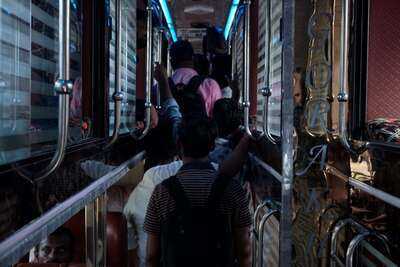
Noida: As sleeper buses operating on highways face scrutiny over safety lapses and overloading after a fire on a Delhi-Mahoba AC bus burnt nine passengers to death earlier this week, retrofitters TOI spoke to over the week said it was common practice for bus operators to retrofit buses after getting fitness certificates and RTO clearances.
According to retrofitters, sleeper buses approved with a 2x1 configuration, two berths on one side, a single berth on the other and a central aisle, are modified by several operators to convert them into a 2x2 layout. The changes allow operators to increase passenger capacity from 36 to 48 by adding 12 berths. But this comes at the cost of aisle space. The length and width of individual berths are also reduced, leaving passengers with limited space to stretch their legs or turn comfortably while travelling. 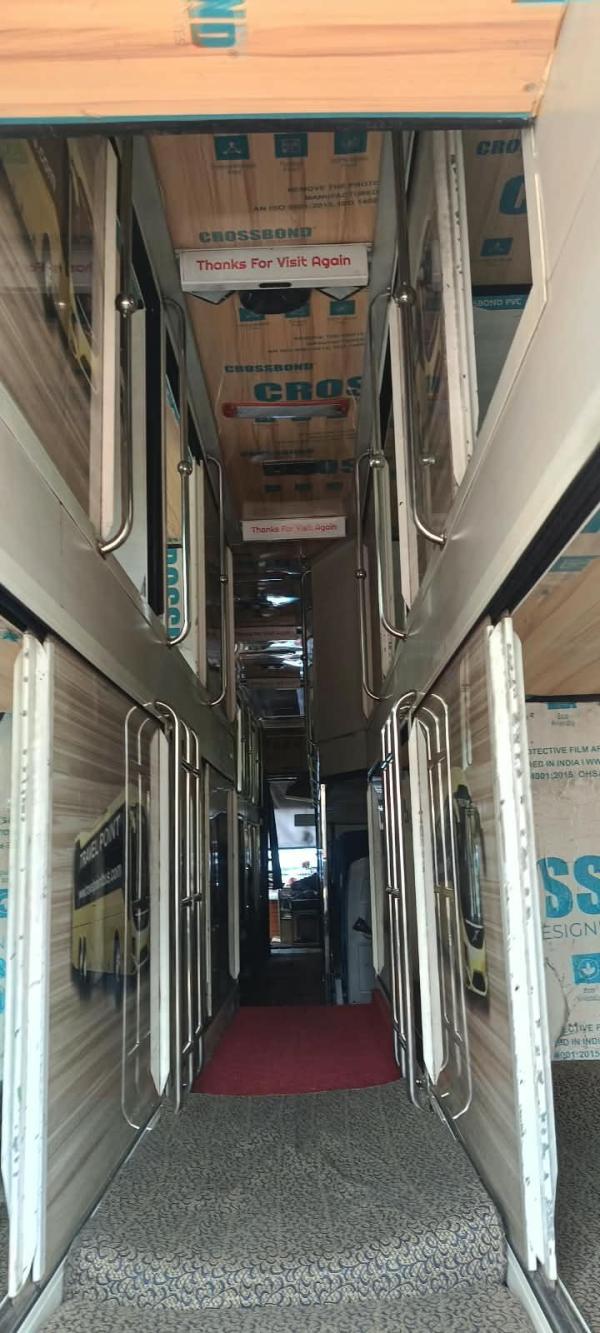
“Retrofitting is not a cosmetic modification. The moment you add AC units, electrical loads or alter the passenger compartment, you are changing the vehicle’s original safety configuration. Every such modification must be properly engineered, inspected and certified, otherwise a small electrical fault can rapidly become a major fire hazard,” a worker at a bus service shop in sector 44 said requesting anonymity.
An overloaded or poorly modified electrical system is a serious risk in a sleeper bus because passengers are confined in an enclosed space and evacuation is slower, another said. “Retrofitting without proper technical checks can compromise the very safety systems designed to protect passengers in an emergency,” he said.
Former deputy commissioner (transport) Anil Chhikara said under Rule 62 of the Central Motor Vehicles Rules, 1989, a new bus gets a fitness certificate valid for two years. It must then undergo fitness testing every two years until it is eight years old, after which the test is required annually.
“The VAHAN system allows online submission of fitness applications, fee payment and appointment/slot booking, but states that fitness remains a non-contactless service, requiring the vehicle to be taken to an RTO or fitness facility for verification and testing. For transport vehicles undergoing renewal, however, MoRTH has mandated fitness testing through private Automated Testing Stations (ATS), eliminating the need for an RTO visit or inspection by a regional inspector,” said Chhikara.
In practice, however, Chhikara said these renewal checks by ATS operators rarely involve a physical inspection, with vehicle owners often permitted to simply upload photographs of the bus. “In fact, 99% of the buses that have been involved in fire incidents have not been genuinely tested even once,” he said, adding that this amounted to a violation of transport laws and a criminal lapse. He said private ATS operators should also be brought under scrutiny.
Chhikara noted that several sleeper buses that have caught fire in recent incidents were BS-VI vehicles, and said their extensive wiring systems made electrical failures a critical line of inquiry. He said modifications to the alternator, battery or wiring were often made after a bus chassis had already been built, typically to raise its load-bearing capacity.
“Local retrofitters may switch the bus’s original alternator with another one, which is not specifically designed for it,” Chhikara said. “During my stint at a private auto company a few decades ago, I learned about power take-off (PTO) units, which are mechanical gearboxes that transfer engine power to auxiliary equipment such as hydraulic pumps. The AC systems of these vehicles should have had matching specifications, but operators change the wiring to draw more load from the ACs, which is illegal and fraught with dangers.”
Chhikara said in the absence of a crackdown on illegal retrofitting of vehicles, workers fitting out buses sometimes use wiring designed for household use, which cannot bear equivalent loads. Additional fittings, including music speakers, add further strain to the system.
Such buses may run without incident for up to six months, Chhikara said, but as the load builds, internal erosion sets in and can lead to electrical failure and fire. “Govt has set standards for buses, but standards for electrical load have not been designed so far. This is why the local coach builders can tweak the wiring of the vehicles so much. They are totally unaware of the specific design they need too,” he said. He added that such protocols exist for electric buses but not for their diesel counterparts.
Under Section 52 of the Motor Vehicles Act and Rule 112 of the Central Motor Vehicle Rules, vehicle alterations, including body-structure modifications, must comply with prescribed standards and be carried out by authorised entities; unauthorised retrofitting is not permitted.
Another concern flagged by industry sources is the alleged misuse of emergency exits, with luggage typically stacked in front of exit doors located on or near the roof, potentially blocking access during evacuations. The Central Motor Vehicles Act permits luggage in overhead compartments, but wholesale goods, sources said, were increasingly being smuggled aboard buses to avoid transport fees and GST.
Some buses also run with fewer fire extinguishers than their passenger capacity requires, while emergency window-breaking hammers, meant to help passengers escape when doors are inaccessible, also remain missing. Safety experts said blocked exits, reduced aisle space and inadequate emergency equipment together heighten the danger during a fire, when smoke and panic can hinder evacuation.
Shyam Lal Gola, general secretary of the Delhi Interstate Bus Operators Association, said accountability after such incidents should not rest with operators alone. He said manufacturers, bus-body builders and companies installing air-conditioning systems must also be examined to establish whether their work contributed to fire risks.
Contact to : xlf550402@gmail.com
Copyright © boyuanhulian 2020 - 2023. All Right Reserved.