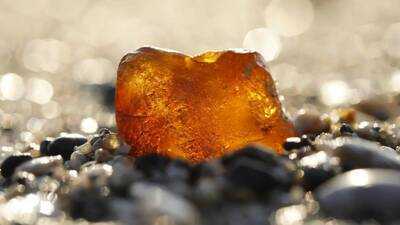
For decades, an elderly woman in Romania used what she believed was an ordinary reddish rock to keep her bedroom door open. But after her death, the 7.7-pound (3.5-kilogram) object was identified as an exceptionally large piece of amber, estimated to be between 38.5 million and 70 million years old .
According to a September 2024 report by EL PAIS, which cited Daniel Costache, director of the Buzau County Museum , the amber was found in the village of Colti in Buzau County and is now classified as a national treasure of Romania. The Buzau County Museum itself later listed the EL PAIS report among its international media appearances in its 2024 activity report.
A doorstop hiding in plain sightThe woman reportedly found the unusual stone in a stream bed near her home in Colti, a village in southeastern Romania known for its amber deposits.
She brought it home and used it as a simple doorstop for decades, apparently unaware that it was fossilized resin of extraordinary geological value.
The story became even more remarkable because EL PAIS reported that burglars who broke into the woman's home stole gold jewellery but left the heavy amber nugget behind.
The woman died in 1991. A relative who inherited the property subsequently became suspicious of the unusually heavy rock and arranged for it to be examined.
Experts confirmed it was ancient amber 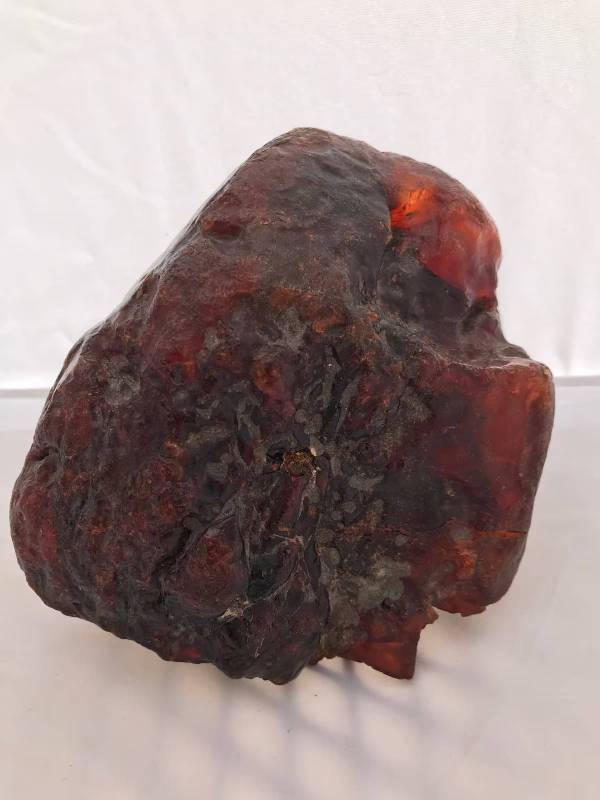
Romanian authorities acquired the specimen and had it examined by specialists at the History Museum in Krakow, Poland.
According to EL PAIS, the Krakow specialists confirmed that the object was genuine amber and estimated its age at between 38.5 million and 70 million years.
The specimen weighs approximately 3.5 kilograms, making it one of the largest intact amber pieces known. It is now held by the Buzau County Museum and has been on display there since 2022.
Estimated value of around €1 millionThe amber has frequently been reported as being worth around €1 million, or roughly $1.1 million.
However, the figure should be treated as an estimate rather than a confirmed sale price. EL PAIS quoted museum director Daniel Costache as saying the discovery has major scientific and museum significance, underscoring that its importance extends well beyond its monetary value.
The Buzau County Museum has also been careful about claims describing the specimen as the world's largest amber or rumanite nugget, with unofficial record titles differing between reports.
Why the Romanian amber is unusualThe amber comes from the Buzau region, where deposits of reddish and dark-coloured fossilized resin are found around Colti.
Locally known as chihlimbar, the material is also referred to as rumanite and is distinguished by its deep red, brown and almost black shades.
Amber forms when tree resin becomes buried and undergoes chemical and geological changes over millions of years. Unlike sap, which transports water and nutrients through a tree, resin is produced as a protective substance, helping trees seal wounds and defend against insects and disease.
A window into prehistoric environmentsLarge pieces of amber can be scientifically valuable because resin may trap insects, plant material and air bubbles before becoming buried.
Such inclusions can preserve biological material in three dimensions and provide researchers with clues about prehistoric ecosystems and environmental conditions.
The Romanian specimen's size makes it particularly notable, as most pieces of raw amber found in nature are much smaller.
Contact to : xlf550402@gmail.com
Copyright © boyuanhulian 2020 - 2023. All Right Reserved.