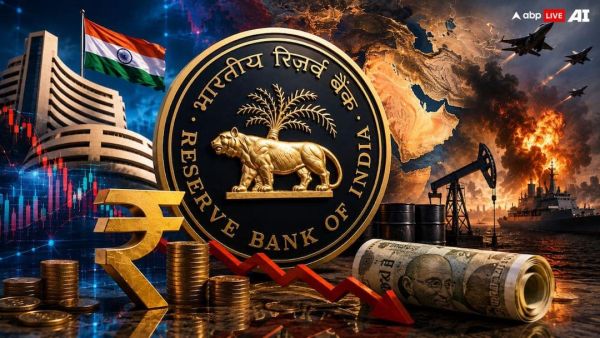
The Reserve Bank of India (RBI) raised the repo rate by 25 basis points to 5.50% on Wednesday, marking the first increase since February 2023. The Monetary Policy Committee (MPC) also shifted its stance from ‘Neutral’ to ‘Calibrated Tightening’, signalling that rate cuts are off the table in the near term.
At the same time, the central bank upgraded its FY27 growth forecast while raising its inflation projection, reflecting a mixed domestic picture against a more challenging global backdrop.
Here are the key takeaways from the October policy review.
RBI Repo Rate Hike: First Increase Since February 2023
The MPC unanimously raised the policy repo rate by 25 basis points from 5.25% to 5.50%.
Following the decision, the Standing Deposit Facility (SDF) rate stands at 5.25%, while the Marginal Standing Facility (MSF) rate and Bank Rate stand at 5.75%.
The change in stance to ‘Calibrated Tightening’ is significant as the RBI indicated that its next move can be either a pause or another hike, depending on incoming data and the outlook.
The central bank said the duration and extent of the tightening cycle will depend on developments in growth and inflation, particularly underlying price pressures, second-round effects of supply shocks and demand conditions.
RBI Raises FY27 GDP Forecast To 7.1%
Despite global headwinds, the RBI remains confident about the resilience of the Indian economy.
It raised its FY27 real GDP growth forecast to 7.1% from 6.7% earlier.
The quarterly projections are:
Q2 FY27: 7.2%
Q3 FY27: 6.9%
Q4 FY27: 6.8%
Q1 FY28: 7.1%
The economy grew 7.8% in Q1 FY27, supported by resilient private consumption, strong investment activity and positive net exports.
The RBI said domestic momentum remains broad-based, with manufacturing and services activity continuing to expand. Merchandise exports also recorded double-digit growth in July-August 2026, while services exports accelerated.
However, a weak and uneven monsoon, strong El Niño conditions, geopolitical tensions, elevated commodity prices and tighter global financial conditions remain risks to the growth outlook.
Inflation Forecast Raised As Price Pressures Broaden
Inflation has emerged as a key reason behind the RBI's policy shift.
CPI inflation rose to 4.82% in August 2026 from 4.45% in July, with food and fuel contributing to the increase. Core inflation stood at 4.2%, while core inflation excluding precious metals was 2.9%.
The RBI has projected FY27 CPI inflation at 5.2%, with the quarterly trajectory at:
Q2 FY27: 4.9%
Q3 FY27: 6.0%
Q4 FY27: 5.7%
Q1 FY28: 5.6%
Core inflation is projected at 4.4% for FY27.
The central bank highlighted risks from deficient monsoon conditions, El Niño, elevated energy and commodity prices and the possibility of continued pass-through into prices.
Governor Signals No Rate Cuts In The Near Term
The RBI's shift to calibrated tightening changes the interest-rate outlook for borrowers and investors.
Governor Sanjay Malhotra said the central bank's assessment shows that inflation and its outlook are no longer as benign as they were last year. Headline CPI inflation is expected to average almost 5.8% over the next three quarters, while core inflation is projected at 4.4% for the financial year.
The RBI's approach will remain dependent on how inflation and growth evolve, leaving the possibility of another hike or a pause at the next policy review.
Maulik Patel, Head of Research, Equirus Securities, said the economy has enough strength to absorb tighter policy, given the 7.1% FY27 growth projection.
He noted that the real policy rate remains negative at around –40 basis points, based on CPI expected to average 5.9% over the next two quarters, pointing to the possibility of further tightening.
However, Patel does not expect an aggressive hiking cycle, citing elevated yields, liquidity absorption measures and the risk of adding pressure to a growth outlook that remains strong but is not insulated from external shocks.
Real Estate: Housing Demand Expected To Hold Up
The rate hike could increase borrowing costs, but industry bodies and real estate experts expect housing demand to remain relatively resilient.
Anshuman Magazine, Chairman & CEO, India, South-East Asia, Middle East & Africa, CBRE, said the impact on housing demand should remain measured, particularly in the mid and premium segments where underlying demand remains healthy.
He said the sector has demonstrated resilience through the current cycle, with robust growth fundamentals and buyer intent providing support. The trajectory of inflation and interest rates will remain important in determining whether the latest increase stays a calibrated response or develops into a prolonged tightening cycle.
Shishir Baijal, International Partner, Chairman and Managing Director, Knight Frank India, said higher borrowing costs could create some affordability pressure, particularly in interest-rate-sensitive and lower-priced segments.
However, he does not expect a material disruption to the sector's broader trajectory in the near term, pointing to the upward revision in the FY27 growth forecast and continued support from private consumption and housing demand.
Festive Season Becomes A Key Test For Housing
The timing of the rate hike is particularly relevant for the housing market as the festive season gets underway.
Shekhar Patel, President, CREDAI, said the increase in borrowing costs could affect sales during the festive period, although the underlying need for housing remains strong as urbanisation expands.
He also pointed out that a home loan is typically a long-term commitment, meaning borrowers should view a rate movement in the context of the longer economic cycle rather than in isolation.
Praveen Jain, President, NAREDCO, similarly expects the impact on residential demand to remain limited. He said strong buyer sentiment, festive demand and the long-term need for homeownership should help the sector maintain its momentum.
NBFCs Face Higher Funding Costs
The policy move also has implications for non-banking financial companies.
Abhimanyu Munjal, MD & CEO, Hero FinCorp, said higher interest rates would affect funding costs for NBFCs, increasing the importance of disciplined pricing, diversified funding sources and prudent underwriting.
At the same time, he said underlying credit demand remains healthy, creating room for calibrated, quality-led growth while balancing opportunity against risk and profitability.
MSMEs Could Feel The Pressure On Working Capital
For MSMEs, the rate decision comes at an important point in the business cycle, with the festive season typically requiring higher inventory, production and hiring.
Shrikant Goyal, Managing Director, Getfive Funds, said even a modest increase in borrowing costs can squeeze margins for smaller businesses, particularly those with limited pricing power.
He said MSMEs have nevertheless shown resilience through formalisation, digital adoption and improving access to credit. A stable rate environment would have offered greater predictability during the festive period, while a gradual transmission by lenders could help limit the pressure on businesses.
New RBI Measures To Make Financial Information Easier To Access
The October MPC also announced measures focused directly on customer convenience.
The RBI will introduce interoperability among NBFC-Account Aggregators, allowing customers to access and share financial information across different Financial Information Providers through any NBFC-AA of their choice.
The measure is expected to be implemented by December 31, 2026.
The RBI is also facilitating SEBI-regulated depositories to include information relating to bank deposit accounts in the Consolidated Account Statement (CAS) through NBFC-AAs.
This would allow demat account holders to view their demat holdings and bank deposit information in one place. Customers without demat accounts will also continue to be able to obtain a consolidated view of their financial information and share it through NBFC-AAs.
RBI To Set Up Technical Committee For Financial Markets
The central bank has also decided to constitute a Technical Consultative Committee for Financial Markets.
The committee will provide a structured forum for engagement with market participants and other stakeholders on policy and operational matters concerning the money, government securities and foreign exchange markets, along with their respective derivative markets and infrastructure.
The move comes as financial markets and their infrastructure continue to evolve rapidly.
Global Risks Remain A Key Concern
The RBI's policy decision comes against a difficult international backdrop.
The re-escalation of the West Asia conflict, tariff-related uncertainty, elevated bond yields and concerns over a potentially unwieldy correction in AI stock valuations are weighing on global sentiment.
The central bank also flagged higher crude prices and global financial tightening as risks to India's inflation and growth outlook.
At the same time, the RBI believes India's underlying economic strength provides a buffer against these external shocks.
The central bank's broader message is that price stability and financial stability remain essential for sustainable long-term growth, with policy expected to focus on strengthening the economy's resilience while responding to emerging inflation risks.
Contact to : xlf550402@gmail.com
Copyright © boyuanhulian 2020 - 2023. All Right Reserved.