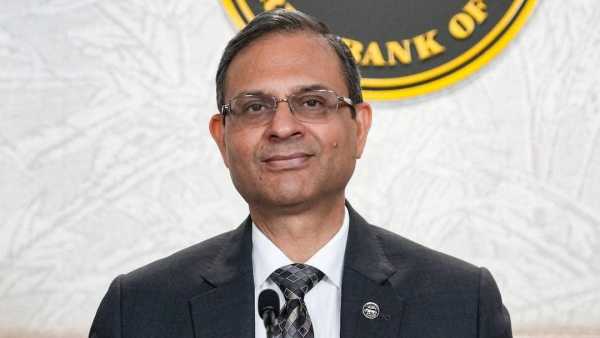
The Reserve Bank of India (RBI) has announced measures aimed at making it easier for consumers to access and share their financial information, while also strengthening engagement with participants across financial markets.
The announcements came alongside the Monetary Policy Committee’s decision to raise the repo rate by 25 basis points to 5.50% and shift its stance from ‘Neutral’ to ‘Calibrated Tightening’.
Among the consumer-focused measures, the RBI will enable interoperability among NBFC-Account Aggregators (NBFC-AAs), allowing customers to aggregate financial information through any Account Aggregator of their choice. The central bank is also facilitating SEBI-regulated depositories to include information related to bank deposit accounts in their Consolidated Account Statement (CAS).
Both measures are expected to be implemented by December 31, 2026.
One Account Aggregator Could Access Financial Information Across Providers
The interoperability measure is aimed at giving customers greater flexibility when accessing and sharing their financial information.
Under the proposed arrangement, customers will be able to access and share information across different Financial Information Providers through any NBFC-AA of their choice.
The RBI said the move is intended to enhance customer convenience and make the Account Aggregator framework more seamless for users.
For consumers, the significance lies in being able to use their preferred Account Aggregator rather than having access to financial information tied to a particular aggregator.
Bank Deposits Could Appear Alongside Demat Holdings
The RBI is also facilitating SEBI-regulated depositories to include information relating to bank deposit accounts in their Consolidated Account Statement through NBFC-AAs.
This would allow demat account holders to see information relating to their demat holdings and bank deposits in one place through the CAS.
The facility will not be limited to investors with demat accounts. Customers without demat accounts will continue to be able to obtain a consolidated view of their financial information and share it through NBFC-AAs.
Together, the two changes are designed to make it easier for customers to bring different pieces of their financial information together and share them when required.
RBI To Create Technical Committee For Financial Markets
The RBI has also announced the creation of a Technical Consultative Committee for Financial Markets, responding to the rapidly evolving dynamics of financial markets and their infrastructure.
The committee will provide a forum for structured engagement between the RBI, market participants and other stakeholders on policy and operational matters related to financial markets.
Its discussions will cover the money, government securities and foreign exchange markets, along with their respective derivative markets and infrastructure.
The initiative comes as the RBI seeks to engage more closely with market participants on developments across financial markets.
RBI Focuses On Resilience Amid Global Risks
In his concluding remarks, RBI Governor Sanjay Malhotra said global economic sentiment remains under pressure from the West Asia conflict, tariff-related uncertainties, elevated bond yields and risks of an unwieldy correction in AI stock valuations.
These factors, he said, are weighing on India's growth-inflation outlook and contributing to risk-off sentiment towards emerging market economies.
However, the Governor stressed that India's inherent resilience and economic strength are helping the country navigate these challenges.
Against this backdrop, the RBI said its policies would continue to focus on strengthening that resilience, with price stability and financial stability remaining central to sustainable long-term growth.
Contact to : xlf550402@gmail.com
Copyright © boyuanhulian 2020 - 2023. All Right Reserved.